How to Choose Work Gloves: Material, Rating & Fit
Posted by G & F Products R&D Team on Mar 10th 2023
Not sure which pair you need? This guide walks through the choices that actually matter — material, the rating printed on the cuff, fit, and care — and points you to our in-depth guide on each. If you already know what you're after, browse all work gloves.
Start with the material
Leather is the traditional choice for handling rough material, lumber, and anything with splinters or sharp edges. Cowhide is the toughest, pigskin stays softer after it gets wet, and goatskin gives the best dexterity. See the full range of leather gloves.
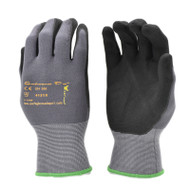
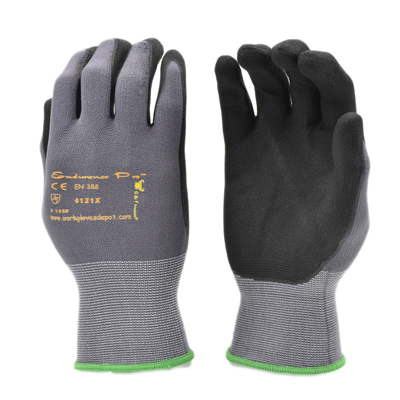
Coated knits — polyurethane, nitrile, latex or PVC over a seamless liner — are what most people reach for day to day. They're light, they breathe, and the coating adds grip without killing finger feel. Each coating behaves differently around oil, water and cold; our guide to nitrile, PU, latex and PVC coatings compares them side by side. How thick the liner is comes down to its knit gauge, explained in work glove gauge explained.
Cut-resistant knits use engineered yarns such as Kevlar or HPPE to resist blades — the right pick for glass, sheet metal, food prep and demolition. Browse cut and heat resistant gloves.
Insulated and waterproof styles matter once the temperature drops: fleece or Thinsulate linings hold heat, and a PVC or latex dip keeps water out. See cold weather gloves and water resistant gloves.
Read the rating on the cuff
Two systems cover most of what you'll see printed on a glove. EN 388 is the European standard for mechanical risks: four numbers for abrasion, blade cut, tear and puncture, followed by an ISO cut letter and an optional P for impact. We break down every digit in EN 388 decoded.
ANSI/ISEA 105 is the North American cut scale, running A1 through A9. A1–A3 suits light handling, A4–A5 covers glass, sheet metal and food processing, and A6 and above is for heavy blade exposure. For help picking a level, see how to choose cut-resistant gloves.
For cold work, EN 511 rates convective cold, contact cold and water penetration. Our guide to insulated glove temperature ratings explains what those numbers and Thinsulate gram weights mean in practice.
Get the fit right
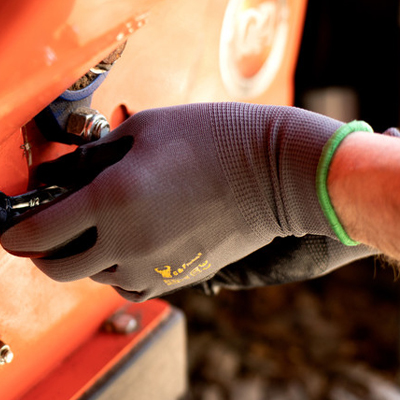
Measure around your dominant hand at the widest part of the palm, excluding the thumb, ideally at the end of the day. A pair that's too loose bunches in the palm and costs you grip; too tight and your hand tires within the hour. Sizes also vary from brand to brand, which is why we wrote how to size a work glove.
Match the pair to the job
- Construction and general labor: coated knit for everyday tasks, leather for material handling.
- Mechanics and automotive: nitrile-coated or padded synthetic for oil and knuckle protection.
- Warehouse and logistics: light PU-coated gloves for grip and touchscreen use.
- Glass, metal and food prep: ANSI A4 or higher cut-resistant knit.
- Gardening and landscaping: breathable coated knit, or leather for thorns — see garden gloves.
- Cold storage and winter outdoor work: insulated and waterproof.
Most crews end up with two pairs: a light coated pair for everyday tasks, and a heavier leather or cut-resistant pair for the jobs that chew through gloves.
Make a pair last
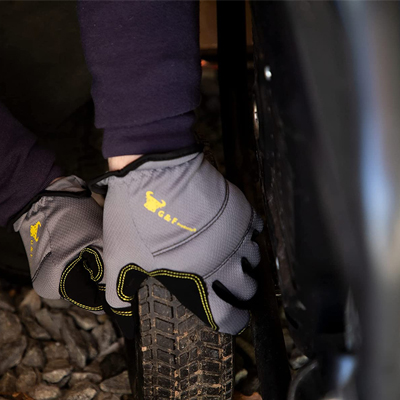
Wash coated knits in cold water and let them air dry — heat shrinks the liner and stiffens the coating. Leather should never go in a dryer; let it dry at room temperature and condition it occasionally, as covered in caring for leather gloves. Store every pair dry and flat rather than balled up in a toolbox; our tips for storing gloves so they last longer go further. And once the coating wears through at the fingertips or a seam opens, it's time for a new pair — here's how to tell when to replace them.
Ready to pick a pair? Start with the full range of work gloves, or jump straight to cut and heat resistant, leather or cold weather styles.